
A new survey of 7,895 Americans from Testing.com reveals how common STD/STI non-disclosure really is, why people stay silent, and how often that silence leads to transmission.
Highlights
- 45% of Americans diagnosed with an STD/STI have had sex without disclosing their status
- Nearly 6 in 10 who didn’t disclose also had unprotected sex
- Shame is the leading reason for staying silent (49%)
- 17% say a partner contracted an STD/STI from them
- 1 in 4 say disclosure isn’t always necessary before sex
- Young men are most likely to hide their positive status from partners
Nearly Half of Americans With an STD Didn’t Disclose to a Partner
Nearly half (45%) of Americans who tested positive for an STI say they have withheld that information from a sexual partner at least once. Of that group, 2% say they failed to disclose many times, 20% a few times, and 23% at least once.
The risk often extended beyond silence. Among those who did not disclose, 59% also report having unprotected sex without informing their partner, significantly increasing the likelihood of transmission.

Non-Disclosure Happens Across All Relationship Types
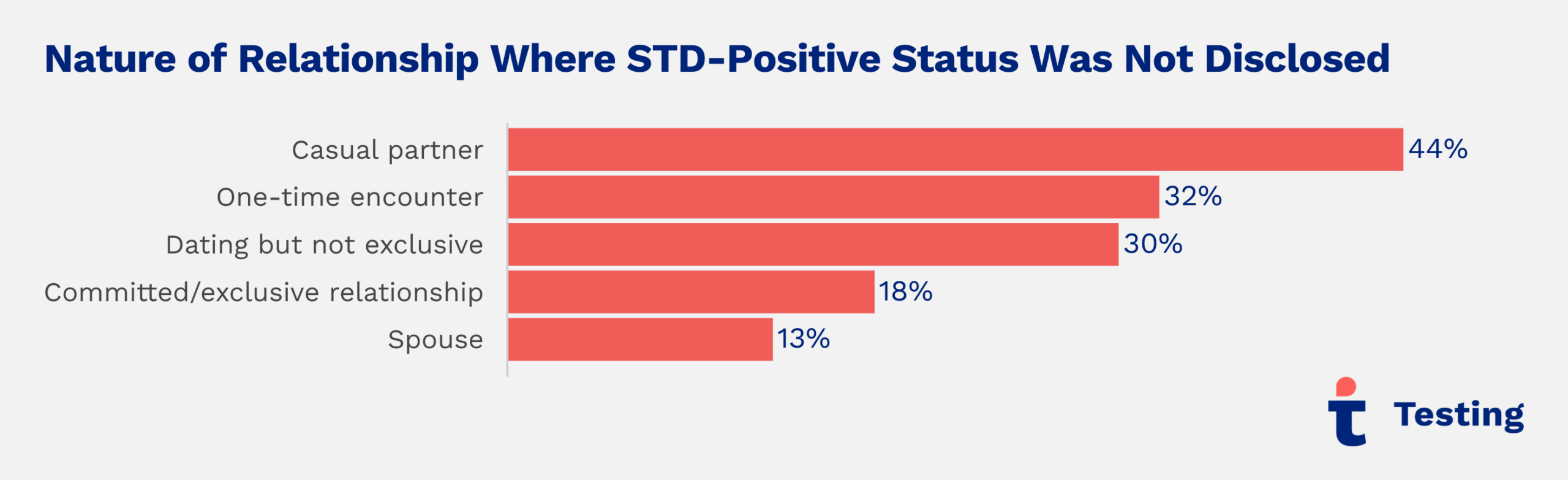
Among those who kept their status private, 32% withheld the information from a casual partner, 22% from someone they were dating but not exclusively, and 24% during a one-time encounter.
However, silence also occurred in more serious relationships. Thirteen percent did not disclose to a committed, monogamous partner, and 9% withheld their status from a spouse.
“Hiding an STD from a partner can seriously harm their health,” says Toni Brayer, M.D., an internal medicine doctor and member of Testing.com’s medical review board. “Chlamydia, syphilis, HPV warts, and HIV can cause problems such as infertility, chronic pain or even death.
“Not disclosing can put the partner at risk and is a breach of trust that can permanently damage the relationship. Disclosure is important so both partners can decide about testing, treatment and protection.”
Shame Is the #1 Reason Americans Hide Their STD Status
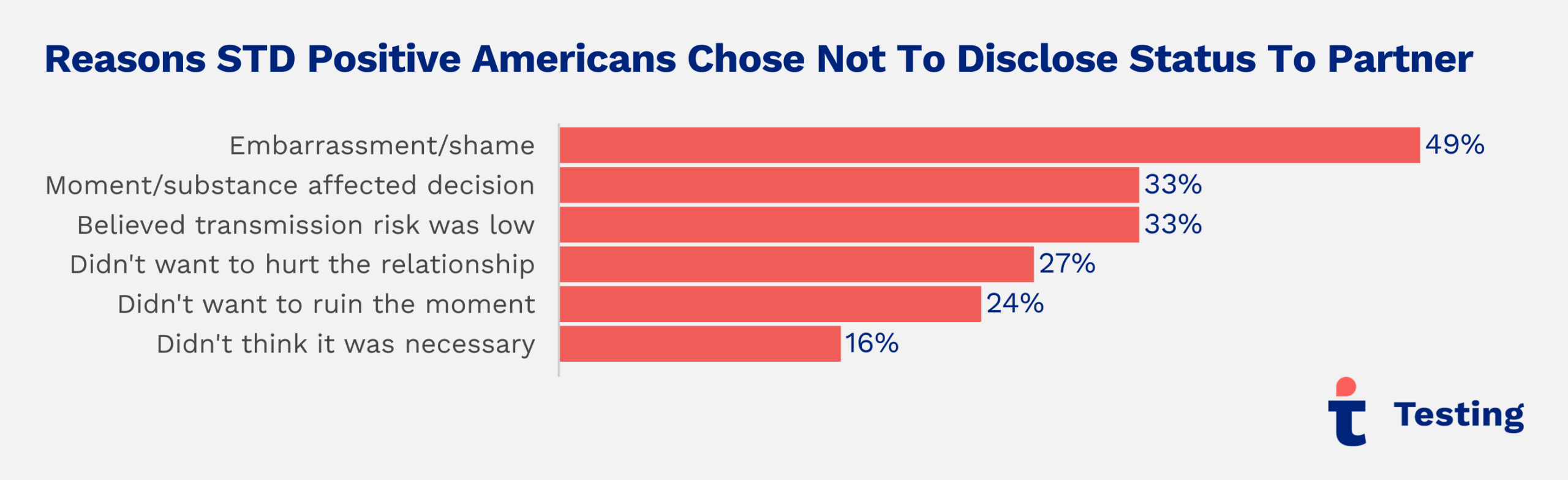
The most commonly cited reason for non-disclosure is embarrassment or shame (49%). Another 33% say alcohol or the heat of the moment influenced their decision, and the same share believed the risk of transmission was low. More than a quarter (27%) say they did not want to jeopardize the relationship, while 24% didn’t want to ruin the moment. Sixteen percent say they simply didn’t think disclosure was necessary.
“It’s important to remember that STDs can be transmitted even without symptoms, and anyone who is sexually active can get one, regardless of how many partners they’ve had,” says Dr. Brayer. “Many people still believe that only ‘promiscuous’ or irresponsible people get STIs, but this isn’t true.”
“There is still shame tied to sex itself, which can make people feel embarrassed about testing or talking openly with partners. Some people fear being judged, rejected, or labeled if they disclose an infection. These stigmas lead people to delay testing, avoid talking with partners, or hide symptoms. As a result, infections can spread unknowingly and go untreated longer, increasing health risks,” adds Dr. Brayer.
1 in 6 Say a Partner Contracted an STD From Them
Seventeen percent of those who chose not to disclose report that a partner later contracted an STI from them.
Even after transmission occurs, many still do not come clean. More than half say they would not admit they withheld their status, even after a partner tests positive.
“For sexually active people, using condoms correctly every time greatly reduces the risk of most STIs, including HIV, gonorrhea, and chlamydia,” Dr. Brayer explains. She also advises every pre-teen to be vaccinated for HPV and Hepatitis B to prevent infections that can cause cancer or liver disease, and notes that limiting the number of partners and getting tested regularly can help prevent or catch infections early.
1 in 4 Say Disclosure Isn’t Always Necessary
While most respondents who have tested positive for an STD believe partners have a right to know, not everyone agrees.
Seventy-four percent say sexual partners always have a right to be informed before sex. However, 24% say it depends on the situation, and 2% say partners do not always have a right to know.
Young Men Are Most Likely To Fail To Disclose
Across age groups, men are more likely than women to report having sex without disclosing a positive STD/STI diagnosis. Younger adults are also more likely than older Americans to hide their status.
Methodology: Testing.com surveyed 7,895 U.S. residents between the ages of 18 and 65 in February 2026 using the online survey platform Pollfish. Respondents were screened to qualify based on relevant criteria. The margin of error is ±1.1% at a 95% confidence level.