Missouri Blood Testing Directory
To help you locate an accredited laboratory/testing center, a list of resources has been compiled and can be found below.
Consult with your health care provider about any lab testing that you may be considering. It is also important to follow up with your health care provider to discuss your results within the context of your medical history.
Health Statistics in Missouri
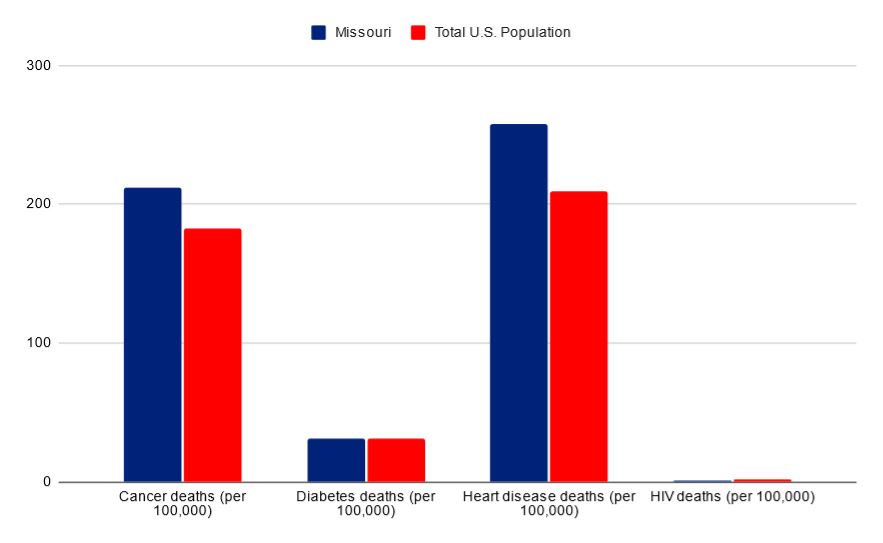
Missouri’s reported deaths for cancer and heart disease are above the national average, while diabetes and HIV deaths were just below. Early detection can help death rates improve. Reported deaths in Missouri include:
|
Missouri |
Total U.S. Population |
| Cancer deaths (per 100,000) |
212.1 |
182.6 |
| Diabetes deaths (per 100,000) |
31.3 |
31.4 |
| Heart disease deaths (per 100,000) |
257.9 |
209.4 |
| HIV deaths (per 100,000) |
1 |
1.5 |

Source: CDC National Center for Health Statistics Mortality Dashboard
Common Blood Tests
Should you get a blood test? Learn about some of the most common blood tests and what they’re used for.
| Test |
What it’s used for |
| Basic metabolic panel (BMP) |
- Overall health screening
- Kidney function
- Blood glucose
- Calcium
- Electrolytes
|
| Blood clotting test |
- Bleeding disorders
- Blood clotting disorders
- Platelet disorders
|
| Complete blood count (CBC) |
- Anemia
- Bleeding disorders
- Blood cholesterol
- Blood clotting disorders
- Sickle cell disease
- Thalassemia
|
| Lipid panel |
- Atherosclerosis
- Blood cholesterol
- Coronary heart disease
- High blood triglycerides
|
| STD panel |
- HIV
- Herpes 1 and 2
- Chlamydia
- Gonorrhea
- Syphilis
- Hepatitis A, B, and C
|
Blood Testing in Missouri:
Community-based health testing organizations generate awareness and foster social change while providing access to testing and treatment.
If you’re concerned about visiting your regular doctor or can’t afford the cost of private testing, a community testing center may be able to help. While community testing centers may charge a fee for blood testing, it’s common to find free or low-cost testing from these resources:
- Advanced Practice Wellness CenterAddress: 1901 E. 32nd St., Suite 20, Joplin, MO 64804 Number: (417) 781-2046
- BJC Outpatient Center at EllisvilleAddress: 15838 Fountain Plaza Dr., Chesterfield, MO 63017 Number: (636) 484-5220
- Community Clinic of Southwest MissouriAddress: 701 S. Joplin Ave., Joplin MO, 64801 Number: (417) 624-5500
- My Blooming Health LabAddress: 2040 Woodson Rd., Suite 204A, Overland, MO 63114 Number: (314) 942-3272
- St. Luke’s Hospital Lab ServicesAddress: 1722 Clarkson Rd., Chesterfield, MO 63017 Number: (636) 256-4968
- Total Access Urgent CareAddress: 2501 Clarkson Rd., Chesterfield, MO 63017 Number: (636) 556-0114
- Wes & Jan Houser Women’s PavilionAddress: 1532 W. 32nd St., Joplin, MO 64804 Number: (417) 347-7777
Frequently Asked Questions About Blood Tests in Missouri
Can I order my own blood tests in Missouri?
In Missouri, you can order your own blood tests, depending on the type you need.
Can I request a blood test without seeing a doctor?
Known as direct access testing or direct-to-consumer testing, some blood tests can be done by visiting a lab without a doctor’s prescription, or you may be able to order a lab test online.
How much does blood testing cost in Missouri?
Blood testing prices vary by the type of health insurance plan, where you go, and the type of test you get. You may pay nothing or a small fee at free or public health clinics but may pay more for highly specialized blood tests than routine blood work.
Can I use insurance to get my blood tested?
Insurance pays or covers at least some of the cost of many blood tests, but you may be responsible for a copayment or deductible. Get in touch with your plan to ask about your coverage.
How often should I get my blood tested?
How often you need blood work is up to your physician and will depend on your general health status and age. If you are a younger, relatively healthy patient, you might only need your blood tested yearly. Those with chronic conditions or on medication might need more frequent testing.
Can you eat or drink while fasting for a blood test?
Depending on the type of test, you may have to refrain from eating or drinking in the hours before your blood work. Be sure to follow your pre-testing instructions carefully, or call your lab to ask any questions before your visit.
What does routine blood work check for?
Regular blood testing measures the levels of various elements in your blood to see if you fall within normal limits. Lower or higher levels could mean that your body is fighting an infection or that a body system or organ isn’t functioning properly. Blood tests can also help confirm a diagnosis or rule one out.
Common routine blood tests include a basic metabolic panel that measures blood glucose, calcium, and electrolyte levels. Tests also entail a complete blood count, which includes a count of red blood cells, white blood cells, platelets, and hemoglobin.
Health Resources in Missouri
Learn more about health and how blood testing can help you manage your well-being. Numerous authoritative resources at the state and national levels provide valuable information about the most common health conditions. blood tests, and wellness.