South Carolina Blood Testing Directory
To help you locate an accredited laboratory/testing center, a list of resources has been compiled and can be found below.
Consult with your health care provider about any lab testing that you may be considering. It is also important to follow up with your health care provider to discuss your results within the context of your medical history.
Health Statistics in South Carolina
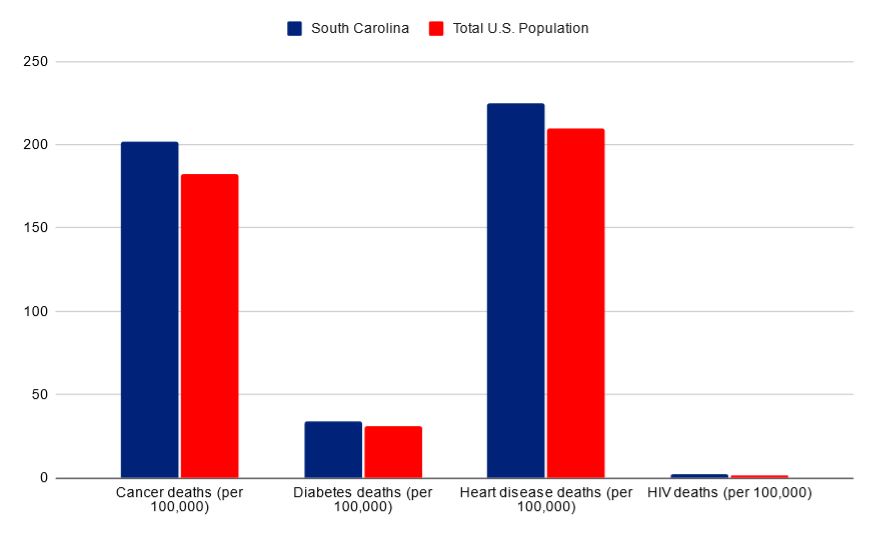
South Carolina’s reported deaths for cancer, diabetes, heart disease, and HIV are all above the national average. That’s why early detection through regular screenings and blood tests is so important. Reported deaths in South Carolina include:
|
South Carolina |
Total U.S. Population |
| Cancer deaths (per 100,000) |
201.6 |
182.6 |
| Diabetes deaths (per 100,000) |
34 |
31.4 |
| Heart disease deaths (per 100,000) |
225 |
209.4 |
| HIV deaths (per 100,000) |
2.2 |
1.5 |

Source: CDC National Center for Health Statistics Mortality Dashboard
Common Blood Tests
Should you get a blood test? Learn about some of the most common blood tests and what they’re used for.
| Test |
What it’s used for |
| Basic metabolic panel (BMP) |
- Overall health screening
- Kidney function
- Blood glucose
- Calcium
- Electrolytes
|
| Blood clotting test |
- Bleeding disorders
- Blood clotting disorders
- Platelet disorders
|
| Complete blood count (CBC) |
- Anemia
- Bleeding disorders
- Blood cholesterol
- Blood clotting disorders
- Sickle cell disease
- Thalassemia
|
| Lipid panel |
- Atherosclerosis
- Blood cholesterol
- Coronary heart disease
- High blood triglycerides
|
| STD panel |
- HIV
- Herpes 1 and 2
- Chlamydia
- Gonorrhea
- Syphilis
- Hepatitis A, B, and C
|
Blood Testing in South Carolina:
Community-based health testing organizations generate awareness and foster social change while providing access to testing and treatment.
If you’re concerned about visiting your regular doctor or can’t afford the cost of private testing, a community testing center may be able to help. While community testing centers may charge a fee for blood testing, it’s common to find free or low-cost testing from these resources:
- Community Medical Clinic of Aiken County (CMCAC)Address: 44 Greenville St. NW, Aiken, South Carolina 29801 Number: (803) 226-0630
- Community Medical Clinic of Kershaw County (CMC)Address: 110 C E. DeKalb St., Camden, SC 29020 Number: (803) 713-0806
- Fetter Health Care NetworkAddress: 51 Nassau St., Charleston, SC 29403 Number: (843) 722-4112
- Greenville Free Medical ClinicAddress: 600 Arlington Ave., Greenville, SC 29601-3204 Number: (864) 232-1470
- Joseph H. Neal Health CollaborativeAddress: 1411 Barnwell St., Columbia, SC 29201 Number: (803) 386-0475
- Rural Health Services (RHS)Address: Clyburn Center for Primary Care, 1000 Clyburn Pl., Aiken, SC 29801 Number: (803) 380-7000
Frequently Asked Questions About Blood Tests in South Carolina
Can I order my own blood tests in South Carolina?
Yes, depending on the type of test, you can order your own blood tests without a doctor’s orders in South Carolina.
Can I request a blood test without seeing a doctor?
There are many opportunities to go directly to a lab or order blood tests online without having to first see a doctor. This is known as direct-to-consumer testing. Some can even be done at home.
How much does blood testing cost in South Carolina?
The price of blood tests ranges widely depending on the type of blood tests you are getting, your health insurance, and where you’re getting tested. In many cases, tests may be free or very low cost if you visit a public health clinic or if your health insurance covers them. Some specialized blood tests may be more expensive or have higher out-of-pocket costs.
Can I use insurance to get my blood tested?
Health insurance usually covers blood testing ordered by a physician as part of preventative care or for diagnostic reasons. You may have an out-of-pocket cost if you have a copayment or deductible. Contact your health insurance plan with any questions about your coverage.
How often should I get my blood tested?
Many people get routine blood testing once per year as part of an annual physical, but others may need more frequent monitoring. If you have chronic conditions or are taking medications, you may need blood tests every few months or more frequently. How often you need to get your blood tested is usually up to your primary care physician or specialists (if you’re seeing any).
Can you eat or drink while fasting for a blood test?
It’s always best to double-check what you need to do to prepare for a blood test. Some will not have any restrictions, while others may require that you don’t eat or drink for a set number of hours. You should always receive pre-testing instructions, but contact your health care provider or lab when in doubt.
What does routine blood work check for?
Getting routine blood work allows your health care providers to gauge if you are within normal limits and helps identify trends and changes over time. Tests like a complete blood count or basic metabolic panel can help identify if body functions are operating normally. Blood tests can also indicate if you have an infection, or help to explain other symptoms you may be having.
Health Resources in South Carolina
Getting blood testing and monitoring your health regularly is important. If you need guidance or want to learn more, state and local resources offer a wealth of knowledge about blood tests and wellness in general.